31 weeks pregnant: development and the baby’s position
31 weeks pregnant is a stage at which, the NHS says, the baby is around 41.1 cm long from head to heel, about the size and weight of a coconut, and very active (NHS, 2026). This page sets out what the NHS and ACOG say about week 31, including how the baby’s position is checked.
Last updated
Medically reviewed by Dr Mary Davidson, Reproductive endocrinologist, checked on
Seek help now if you have any of these symptoms
Bleeding and cramping are common in early pregnancy and often do not mean miscarriage. The symptoms below, however, need to be assessed straight away.
- Soaking two or more sanitary pads per hour, or passing large clots
- Severe lower abdominal pain, especially on one side
- Pain at the tip of the shoulder
- Dizziness, fainting, or collapse
- Signs of shock — pale, clammy, rapid heartbeat, breathlessness
- Pain on opening bowels, or bladder or bowel changes
- Feeling very unwell, or feverish
Showing routes for United States.
How the sources describe development around 31 weeks
- Size and shape, NHS
- The NHS week 31 page in its week-by-week guide (NHS, 2026) gives the baby as around 41.1 cm long from head to heel and compares it to a coconut in size and weight. It says the baby is very active, moving around, sucking fingers and doing the odd somersault.
- Growth and fluid, NHS
- The NHS says the baby is getting plumper and looking less wrinkled day by day, that the amount of amniotic fluid is increasing because the baby can now pee, and that the baby will start to recognise voices outside the womb (NHS, 2026).
- Development, ACOG
- ACOG’s list for weeks 29 to 32 includes the fetus being able to stretch, kick and make grasping motions, eyes that can sense changes in light, bone marrow forming red blood cells, a head that may have some hair, and lanugo beginning to disappear (ACOG, How Your Fetus Grows During Pregnancy, 2024). The list is not broken down week by week.
Weeks are counted from the first day of the last menstrual period, so about two weeks of the count come before conception (ACOG, How Your Fetus Grows During Pregnancy, 2024). This page covers 31 weeks 0 days to 31 weeks 6 days.
A normal pregnancy lasts about 40 weeks from the first day of the last menstrual period, so at 31 weeks about 9 weeks remain to the estimated due date (ACOG, How Your Fetus Grows During Pregnancy, 2024). Your own due date depends on your last period or a scan, not on the week alone.
Position and measuring, as the NHS describes it
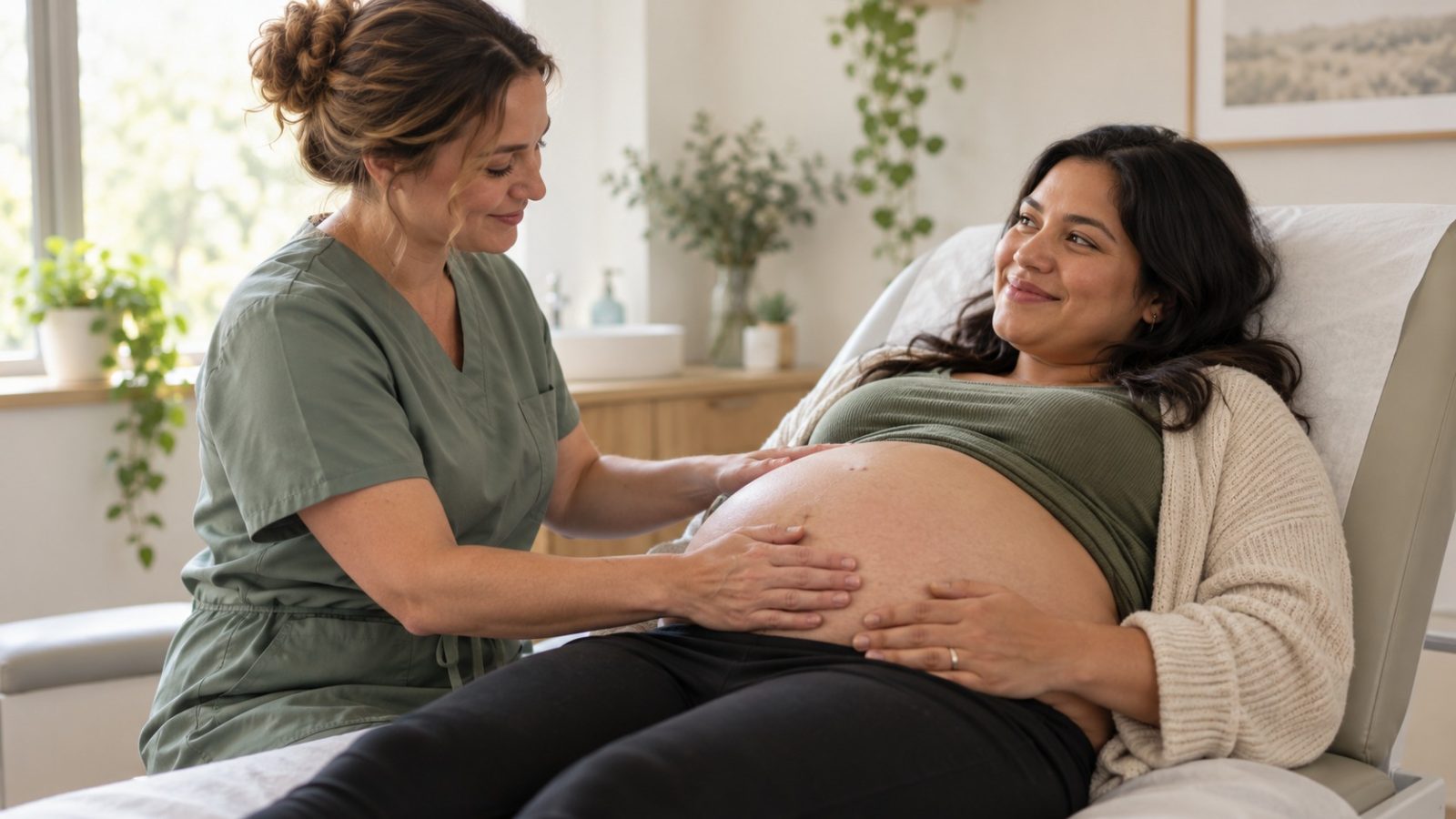
The NHS says that if this is your first baby your midwife or doctor will probably check the size of your uterus by measuring your stomach from the top of the pubic bone to the top of the bump, and will gently feel your belly to work out which way up the baby is. It says some babies will be head down, that if the baby is head up there is still time to get into position, and that some babies do not move down into the pelvis until labour starts (NHS, "Week 31 of pregnancy", 2026).
The NHS also says that if the baby stays head up, in the breech position, that could affect the type of birth you are able to have, and that in some cases your midwife or doctor might recommend a caesarean, with the risks and benefits to be talked through before you decide (NHS, "Week 31 of pregnancy", 2026).
The 31-week appointment
The NHS page on antenatal appointments says you will be offered an appointment at 31 weeks if this is your first baby, at which the midwife discusses preparing for the birth, your preferences for birth and knowing when you are in labour, and discusses screening results (NHS, "Antenatal (pregnancy) care and appointments", 2026).
How long is left
The NHS says you are very unlikely to go beyond another 9 or 10 weeks, and that you could have your baby in just 6 weeks, which it says would not be considered early (NHS, "Week 31 of pregnancy", 2026). ACOG says only about 1 in 20 women give birth on their due dates (ACOG, 2024).
Work out which week you are in
The Pregnancy week calculator takes your last period, conception date, scan or IVF transfer and shows how many weeks and days pregnant you are today.
Sources
- NHS Best Start in Life. Week 31 of pregnancy (week-by-week guide to pregnancy). nhs.uk, 2026.
- NHS. Antenatal (pregnancy) care and appointments. nhs.uk, 2026.
- American College of Obstetricians and Gynecologists. How Your Fetus Grows During Pregnancy (FAQ156). ACOG, 2024.
Frequently asked questions
How big is the baby at 31 weeks pregnant?
The NHS says around 41.1 cm long from head to heel, about the size and weight of a coconut (NHS, 2026).
Which way up should the baby be at 31 weeks?
The NHS says some babies will be head down by now, that a head-up baby still has time to get into position, and that some babies do not move down into the pelvis until labour starts (NHS, 2026). Your midwife or doctor checks the position at appointments.